


IACTMemory Skills Academy Get the course

Illustrated online course · Self-paced · No special talent needed

Remember more, on purpose

Learn the memory methods that turn lists, names, numbers, speeches and exam material into cues you can actually find again. Every lesson works the same way: make a cue, hide the source, recall, then check and repair. Start with five words and build towards a shuffled deck of cards.

  • Start straight after payment
  • 12 months' access
  • IACT certificate you can add to LinkedIn
  • Works on laptop, tablet and phone

What you'll learn

One toolkit for study, people, everyday life and play

Start with the foundations, then follow the goals that matter to you. Each chapter has ten short lessons and ends with a three-question check. Tap a chapter to see what it promises.

Start here · Chapters 1–6

The foundations

Chains, sensory cues, pegs, your first memory palace, number pictures and everyday tasks. Everything else builds on these.

  1. Remember ten things todayCh 1

    Build a ten-item memory chain, find its weak links and use it for a real task.

  2. Make memorable sensory cuesCh 2

    Create clear, personal cues using action, humour, sound, touch, sketches and meaning.

  3. Build rhyming and shape pegsCh 3

    Learn reusable numbered hooks, then recall a list forwards, backwards and by position.

  4. Build your first memory palaceCh 4

    Walk a ten-stop room and recover ten objects in order, backwards and by location.

  5. Remember numbers without losing the detailsCh 5

    Translate digits into images, decode them accurately and keep dates, units and context.

  6. Remember what matters in everyday lifeCh 6

    Clear cues, deliberate attention and checked reminders for real tasks.

Organise · Chapters 7–10

Places, maps, a system and AI

Put real material into places and maps, choose the right tool for each job, and use AI as a practice partner while you do the remembering.

  1. Put lessons into memorable placesCh 7

    Turn science, history and project material into accurate answers, explanations and comparisons.

  2. Draw maps you can think and remember withCh 8

    Build study, report and invention maps, then reconstruct their relationships from memory.

  3. Choose and maintain a memory systemCh 9

    Pick the right tool, prevent competing cues and build a small system you'll keep using.

  4. Make AI your practice partnerCh 10

    Use AI to create useful challenges while you do the remembering, explaining and checking.

Study · Chapters 11–14

Subjects, reports and exams

Turn real study material into answers you can produce under time pressure, and keep exact facts in a reliable record.

  1. Remember and use maths and scienceCh 11

    Connect cues to definitions, relationships and worked problems, then choose the method without a label.

  2. Remember humanities and languagesCh 12

    Retain dates, evidence, quotations and vocabulary while practising interpretation and use.

  3. Write reports and theses with a clear argumentCh 13

    Remember an argument's structure while keeping evidence, figures and citations in a reliable record.

  4. Prepare for examsCh 14

    Turn a page of notes into questions, a useful revision week and an answer under time pressure.

Speak · Chapters 15–17

People, talks and a 30-day plan

Meet a group and remember who is who, give a talk without losing your place, then grow the skill over thirty days.

  1. Remember names, faces and introductionsCh 15

    Connect names to faces and remember the details that make conversation easier.

  2. Deliver a speech and present a projectCh 16

    Learn a complete speech and recover from blanks, then turn a report into a clear talk and answer questions honestly.

  3. Thirty days of growing skillCh 17

    A supplied practice programme that measures what you can recall, explain and use after a delay.

Play · Chapters 18–22

Cards, a memory show and a bonus chapter

Learn a picture for every card, remember a shuffled deck and put on a ten-minute show. If you play cards, a bonus chapter follows play at the table.

  1. Know every card by sightCh 18

    A reversible picture vocabulary for all 52 cards, used without looking at a key.

  2. Remember a shuffled deckCh 19

    From eight cards to a complete 52-card route, with an answer for every position.

  3. Entertain people with your new memory skillsCh 20

    Clear, honest demonstrations with lists, names, numbers and cards, and let your audience try.

  4. Put on a ten-minute memory showCh 21

    Run an inclusive classroom or club event, then turn what worked into a learning habit.

  5. Remember what happened at the card tableCh 22 · optional

    Optional bonus for card players: track public information in bridge, whist and rummy, and explain the decisions it supports.

The habit you'll take away

Notice the exact target, make one clear connection, hide the source and retrieve, then compare and repair. Recognising a picture while it's in front of you is only the start: every lesson asks you to find out what comes back.

Try it free · about 3 minutes

Your first win: five words

This is how the course begins. Take a first try, give the same five words a story, then try again. Count words in their correct positions. There's no pass mark: it's a demonstration, not a test of your ability.

  1. 1 · First try
  2. 2 · Give them a story
  3. 3 · Try again

From the opening of the course. In the course, every lesson saves your cues and recall attempts to your account, and lessons you mark "Revisit this" go onto your review shelf.

Six practice studios

Practise until it's yours

Every illustration below is from the course. The studios are optional practice alongside the lessons, with honest scoring: list scores separate objects recalled from correct positions, and numbers must be complete, leading zeroes included.

A memory chain: a sponge, a brick and a feather tumbling into each other
Lists

Chains and pegs

Link objects through actions, or hang them on numbered pegs so you can answer "what was fourth?" without starting again.

The course's memory-palace room: front door, coat stand, mirror, desk, bookcase, lamp, window, plant pot and armchair
Palaces

A ten-stop memory palace

Walk one illustrated room, place ten objects, then recall them in order, backwards and by location. Read-aloud is built in.

A rose crushing a tin can beside a flying leaf: a number turned into pictures
Numbers

Numbers into pictures

A consistent code turns digits into images you can decode exactly, with dates, units and context kept alongside.

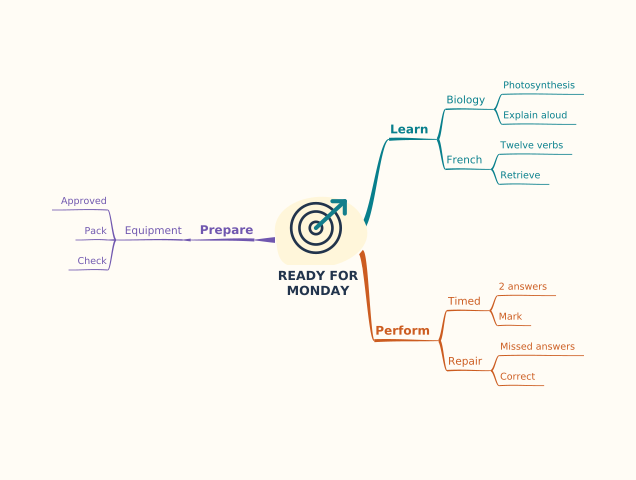
One of the course's illustrated mind maps, with coloured branches from a central topic
Mind maps

Maps you can redraw

Twenty-two illustrated maps for study, reports and ideas. Cover the map, redraw the main branches, then check.

A speaker on stage with a route of cues: a door, a chair and a lectern
Speaking

Speeches without the script

Put each key point on a route, practise out loud, and learn how to recover gracefully from a blank.

A player at a green card table, tracking the cards played with counters
Cards

The card table

Translate card pictures both ways, follow a guided eight-card route to a shuffled deck, and keep track of play in bridge, whist and rummy.

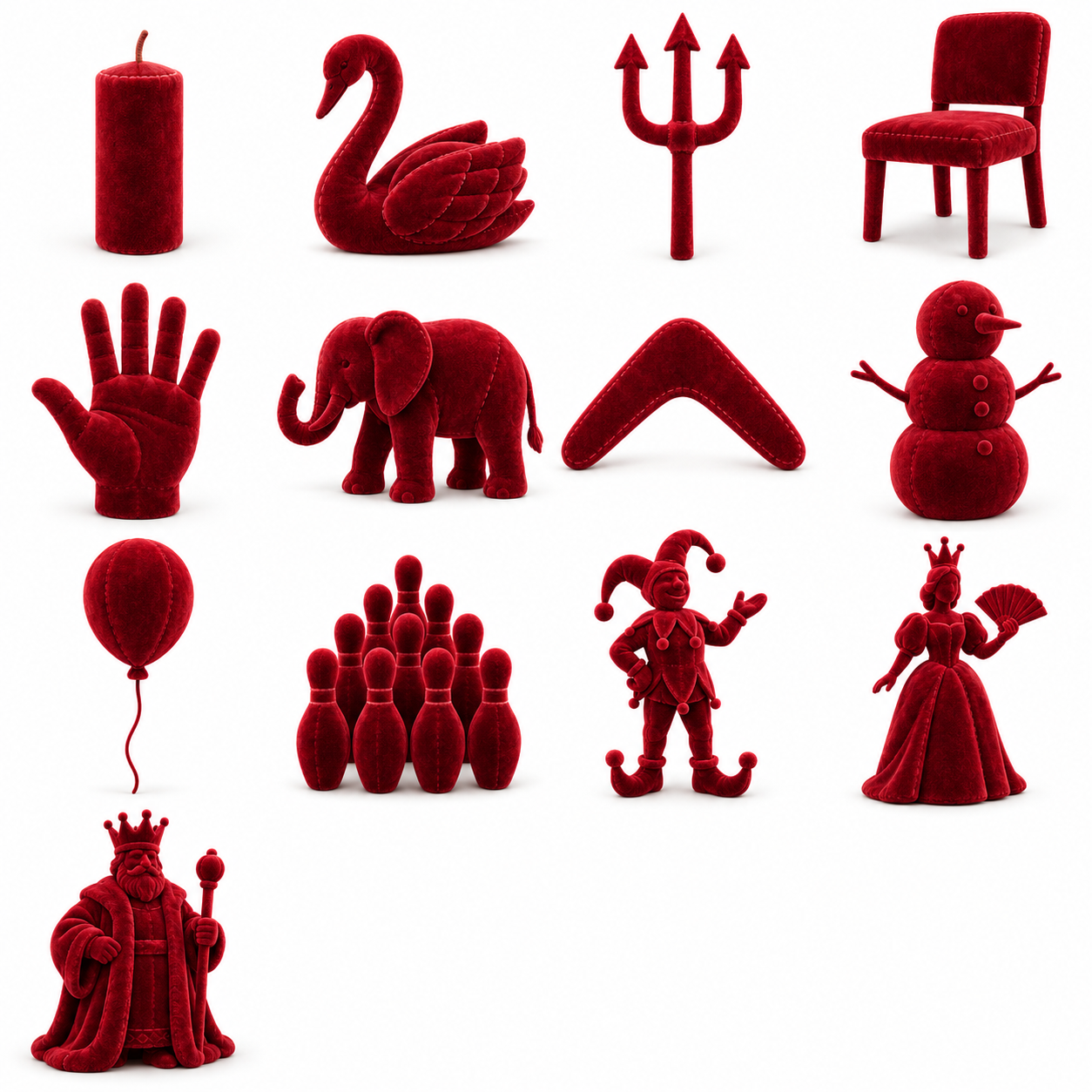
Thirteen red velvet objects, one for each heart from ace to king
The hearts sheet from the course's card dictionary, shown as the original artwork.

The 52-card picture dictionary

Every card becomes something you can see

Each rank has one object, and each suit has one material. The 7 is always a boomerang; hearts are always red velvet. So the 7♥ is a velvet boomerang, and you can read it back without a key.

♥ Hearts
red velvet
♦ Diamonds
clear crystal
♣ Clubs
green wood
♠ Spades
black iron
  • Ace to king: candle, swan, trident, chair, hand, elephant, boomerang, snowman, balloon, bowling pins, jester, queen and king.
  • Reverse decoding drills show you a picture and ask for the card, so the code works both ways.
  • A guided eight-card route with all 52 anchors, then a full shuffled deck, room by room.

How it works

Recall first, then check

  1. 1

    Buy and start straight away

    Pay securely by card through Stripe. Your course account is created with your payment, and your access link appears immediately and is emailed to you. No password to remember: you sign in with a link sent to your email.

  2. 2

    Study one worked example

    Each lesson has a goal, an illustrated scene and the steps that make the cue work. Explain to yourself why each cue returns the exact target.

  3. 3

    Make your own cue, then recall

    Write your cue, hide the material and type what comes back. Reveal the worked answer, compare, and choose Solid for now or Revisit this.

  4. 4

    Keep your notebook

    Your cues and recall attempts are saved to your account with your progress, so your personal cue notebook follows you between devices. Lessons to revisit wait on your review shelf.

  5. 5

    Get IACT certified

    Practise the lessons in the 21 main chapters and pass their chapter checks to unlock the certification assessment. Pass it to get an IACT certificate with an ID anyone can verify, and add it to LinkedIn in one click.

A student studying, covering the page, recalling and checking with a friend
Study, cover, recall, check: the cycle every lesson follows.

Certification

Prove your memory skills. Show it on LinkedIn.

When you've practised the lessons in the 21 main chapters and passed their chapter checks, the IACT certification assessment unlocks in your account.

  • About 20 minutes of real memory work. Five timed tasks, each studied and then recalled with the material hidden: a list of words, a long number, six names and faces, a memory-palace route and a run of playing cards. Plus eight short applied questions.
  • Marked straight away, the same way every time. Every task is scored by clear rules, with feedback on each one. Pass mark 70%, with three attempts.
  • A certificate anyone can check. Your IACT certificate has its own ID and verification page. Download it as a PDF.
  • Add it to LinkedIn in one click. The certificate fills in LinkedIn's Licences & certifications form for you, with IACT as the issuing organisation.
Get the course · €79
IACT

Certificate of achievement

Your name here

has passed the IACT certification assessment for

Memory Skills Academy

Certificate ID IACT-MEM-XXXX-XXXX · verify online

Who it's for

For students and anyone who wants more from their memory

Perfect if you…

  • Are studying for exams and want revision that sticks
  • Forget names the moment you hear them
  • Give talks or presentations and want to lose the script
  • Want a sharper, more reliable everyday memory
  • Like a challenge: a shuffled deck, or a memory show for friends
  • Teach or run a club and want a ready-made, structured programme

What you'll need

  • A laptop, tablet or phone with a modern browser.
  • A pen and paper are handy, though you can type everything.
  • No special talent or artistic skill. If you don't picture things vividly, the course shows spoken, sketched, gesture and place-based cues instead.
  • A few minutes at a time. Short, regular sessions work better than long ones.

Pricing

The complete course. Everything included.

All 224 lessons, the six studios, the card dictionary, the chapter checks and the IACT certification assessment. Prices are in euro and include VAT. Businesses elsewhere in the EU can enter a VAT number at checkout for the reverse charge where it applies.

Individual

For one learner

€79

one-off payment, VAT included

  • All 22 chapters and 224 lessons
  • Six practice studios and 45 worked examples
  • The 52-card picture dictionary
  • IACT certification assessment and certificate
  • Your cue notebook saved to your account
  • 12 months' access, with updates
Best for teams and classes

Team

Buy access for a group in one payment

€295€59 per person

one invoice, one payment, VAT included

2–19 people €59 each · 20–250 people €49 each

  • Everything in Individual, for each person
  • A personal account and access link for each person
  • Each person can earn their own IACT certificate
  • Add your VAT number for a business invoice

Classroom or on-site

A workshop with an IACT trainer

Let's talk

Dublin city centre, your premises, or live online

  • Trainer-led workshop for schools, colleges, clubs and teams
  • Live practice: lists, names and a memory palace
  • eLearning access for every attendee
Make an enquiry

🔒 Secure card payment by StripeApple Pay and Google Pay where availableReceipt and invoice by email

Questions

Frequently asked questions

Do I need a "good memory" to start?

No. The course starts with five words and a story, and builds one step at a time. Students, working adults and older learners can all take part. You'll measure your own starting point and watch it change.

I can't picture things vividly. Will this work for me?

Yes. A faint or absent mental picture doesn't stop you. The course shows how to use spoken stories, quick sketches, gestures and known positions in a room instead, and asks you to test which works best for you.

How is the course structured?

22 chapters of short lessons, 224 in all, in six parts. Each part opens with a profile of a memorable mind, from Leonardo da Vinci to Richard Feynman. Each lesson has a goal, a worked example, your own cue, a recall attempt and a worked answer to check against. Each chapter ends with a three-question check, which passes at 2 out of 3. Six optional studios give you extra practice with lists, palaces, cards, numbers, mind maps and speaking.

Is my work saved?

Yes. Your lesson progress, chapter-check scores, bookmark, and the cues and recall attempts you write are saved to your account, so you can carry on from any device. You can also download your notes at any time.

How long do I have access?

12 months from the day you buy, including any updates we make to the course in that time.

Do I get a certificate?

Yes. When the lessons in the 21 main chapters are practised and their chapter checks passed, the IACT certification assessment unlocks in your account. The bonus chapter on card games is optional. It's about 20 minutes of real memory work: five timed study-and-recall tasks and eight short questions, marked straight away by clear rules. Score 70% or more for an IACT certificate with its own ID and verification page, which you can download as a PDF. You have three attempts.

Can I add the certificate to LinkedIn?

Yes. Your certificate page has an "Add to LinkedIn profile" button. It opens LinkedIn's Licences & certifications form already filled in with the certificate name, IACT as the issuing organisation, the issue date, your certificate ID and the verification link.

Does the course use AI?

Chapter 10 shows how to use an AI chat tool such as ChatGPT or Claude as a practice partner: turning numbers into words, picturing a scene, drafting rhymes and acronyms and setting you challenges, while you do the remembering and check anything it tells you. The course itself works without any AI subscription; its sample AI answers are written teaching examples.

Do I need to create an account or a password?

Your account is created automatically when you pay, using the name and email you give at checkout. Team members create theirs the first time they open their personal link. There's no password: on any device, go to Sign in and we'll email you a link.

How do group and team purchases work?

Choose how many people, pay once, and you'll get a separate access link for each person to send on. Add your organisation's name and VAT number at checkout for a business invoice. For 20 or more people, or if you need to pay by purchase order, send us an enquiry.

Can schools and colleges use it?

Yes. Buy a group of places here, or ask us about a trainer-led workshop and invoice billing. Chapter 21 includes a ready-made ten-minute memory show for a class or club.

What about refunds?

Because the course is digital content you can use straight away, you're asked at checkout to agree that access starts immediately. Under EU consumer law that means the usual 14-day cancellation right no longer applies once you've started. If something isn't working for you, contact us and we'll help.

Classroom and group training

Prefer a trainer in the room?

IACT has delivered training since 1993. We run Memory Skills Academy as a hands-on workshop for schools, colleges, clubs and teams: a first win with lists, names in a real introduction round, and a memory palace everyone leaves with. Every attendee gets eLearning access to keep practising afterwards.

  • Workshops in Dublin city centre
  • On-site at your school, college or workplace
  • Live online for remote groups
  • Invoice and purchase-order billing

Or call us on +353 1 434 7600.

Get Memory Skills Academy

Individual access

1 person · 12 months' access€79

🔒 You'll pay on Stripe's secure checkout page. Prices include VAT. A business can enter its VAT number there.